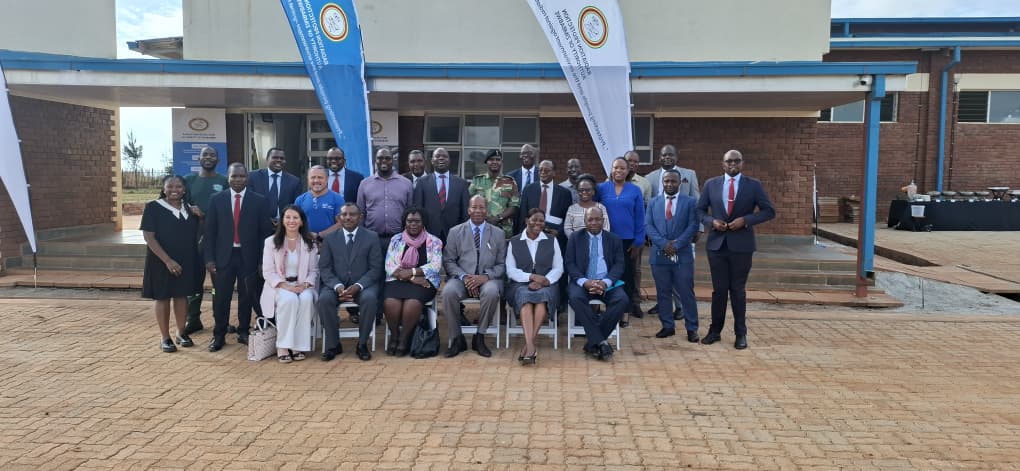
Senior Government officials and a high-level delegation from the International Atomic Energy Agency (IAEA) this week toured the Radiation Protection Authority of Zimbabwe’s (RPAZ) Disused Radioactive Sources Management Facility in Hatcliffe, applauding significant progress in strengthening nuclear safety and security in the country.
The visit brought together officials from the Office of the President and Cabinet, representatives from key ministries, the IAEA delegation, and RPAZ Board and staff.
Welcoming the delegation, RPAZ Board Chairperson Dr. Anna Mary Nyakabau described the facility as a “decisive step forward” in Zimbabwe’s capacity to safely and securely manage radioactive materials.
She highlighted that the project is now 96% complete, with commissioning expected before the end of 2026.
“For years, we recognised the vulnerabilities associated with dispersed storage of disused sources across multiple sites. This centralised, purpose-built facility ensures Zimbabwe meets its national and international obligations while protecting our people and environment,” she said.
Once operational, the facility is expected to meet international safety standards and position Zimbabwe as a regional centre of excellence in radioactive waste management, supporting capacity building and knowledge sharing across Africa.

In his remarks, Deputy Chief Secretary for Finance, Administration and Human resources in the Office of the President and Cabinet, Mr Zvinechimwe Churu reaffirmed Government’s commitment to nuclear safety and lauded the strong partnership with the IAEA.
“Today’s visit reflects the strength of our shared commitment to nuclear safety, security, and sustainable development,” he said, noting that the facility is of national importance in enhancing Zimbabwe’s regulatory and technical capacity.
He commended the Regulatory Body and its partners for their professionalism and called for continued IAEA support to expand ongoing programmes under the Technical Cooperation framework.
Speaking during the visit, IAEA Acting Director for Technical Cooperation Africa, Mr. Gashaw Gebeyehu Wolde, described the facility as a key milestone in Zimbabwe’s efforts to strengthen nuclear and radiation safety.
“Today marks an important step in ensuring the safe, secure and responsible management of radioactive materials for the protection of people and the environment,” he said.
Mr. Wolde noted that through Technical Cooperation Project ZIM9008 and regional safety initiatives, the IAEA has supported Zimbabwe through infrastructure development, technical assistance and capacity building, enabling long-term national ownership aligned with international safety standards.
He added that the facility is now capable of receiving, processing, conditioning and safely storing disused radioactive sources and waste, marking a critical step toward a comprehensive national radioactive waste management system.
The IAEA’s support has also included specialised training, fellowships, equipment provision, and expert missions to strengthen regulatory and operational capabilities.
Mr. Wolde further commended Zimbabwe’s broader progress in strengthening its nuclear safety infrastructure, including efforts to enhance regulatory frameworks and develop a comprehensive nuclear law.
The visit underscored the importance of sustained cooperation between Zimbabwe and the IAEA. Through national projects ZIM9007 and ZIM9008, Zimbabwe has received over US$800,000 in support, contributing to skills development, equipment acquisition, and operational readiness.

An ongoing IAEA expert mission is currently assisting RPAZ in the recovery, collection and management of disused radioactive sources, with further missions planned to support specialised activities such as source conditioning.
The facility has been implemented through a coordinated national approach involving the Ministry of Local Government and Public Works, the Zimbabwe Defence Forces, and RPAZ, alongside international partners.
Officials commended the dedication and collaboration of all stakeholders in advancing the project to its current stage.
Beyond the current project, RPAZ has set sights on developing a centralised laboratory complex adjacent to the facility to further enhance national capabilities in radiation protection and nuclear safety.
As the high-level visit concluded with a guided tour and stakeholder engagements, it reaffirmed Zimbabwe’s commitment to upholding the highest standards of radiation safety and security.
The Disused Radioactive Sources Management Facility stands as a tangible outcome of effective Government–IAEA collaboration and a significant milestone in Zimbabwe’s journey toward the safe, secure, and sustainable management of radioactive materials.